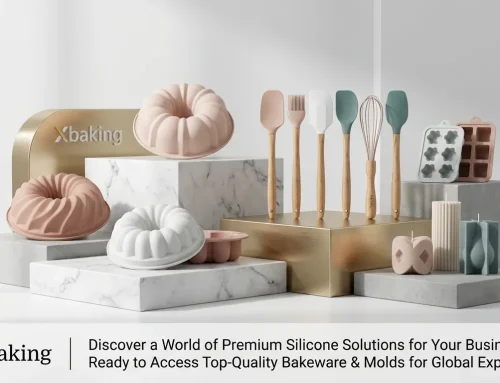
Silicone cooking utensils outperform plastic, wood, and nylon in the three metrics kitchens actually measure: heat resistance (stable to 230 °C / 446 °F), food safety (inert platinum-cured silicone, FDA and LFGB approved), and lifespan (2,000+ use cycles versus months for nylon). For households, that means fewer replacements and no melted-spatula incidents; for retailers and distributors, it means a category with lower return rates and stronger premium positioning.
This guide covers the functional benefits, the safety questions buyers ask most, and what to specify when purchasing silicone utensils at wholesale volume.
Heat Resistance: The Benefit Everything Else Builds On
Food-grade silicone remains stable from −40 °C to +230 °C continuously, with short-duration tolerance above that. Compare that to the alternatives:
| Material | Safe Continuous Temperature | Failure Mode |
|---|---|---|
| Silicone | 230 °C (446 °F) | None within rating |
| Nylon | 200 °C (400 °F) | Melts, edges fray |
| Plastic (PP) | 120 °C (248 °F) | Warps, can leach |
| Wood | No limit (but degrades) | Cracks, absorbs moisture |
| Metal | No limit | Scratches coatings, conducts heat |
The practical result: silicone spatulas, spoons, and tongs work directly in hot pans, on grill grates, and with boiling sugar without deforming. The nylon utensils that dominate value retail shelves fail precisely at the moments users need them most — high-heat searing and frying.
Food Safety: Inert, Non-Toxic, Odor-Free
Are silicone cooking utensils toxic? No — platinum-cured food-grade silicone is chemically inert: it does not react with food, does not leach compounds when heated within rating, and carries FDA 21 CFR 177.2600 (US) and LFGB (EU) approvals.
One genuine caveat: the market contains cheap peroxide-cured silicone with fillers that can carry odor and degrade faster. The differentiation is easy to verify — quality silicone utensils have no smell after washing and hot-water immersion, and the supplier provides cure-system documentation. This is the same material specification discipline we cover in our manufacturer evaluation guide.
Cookware Protection: Non-Scratch by Design
Silicone sits at Shore A 40–60 in utensil applications — hard enough to scrape a pan clean, soft enough to never scratch ceramic, Teflon, or enamel coatings. As non-stick cookware penetration keeps growing in every market, utensil compatibility has become a purchase driver: retail buyers increasingly specify “safe for all cookware coatings” as a shelf requirement, and silicone is the only material category that satisfies it universally.
Durability and Hygiene: The Lifetime Economics
Silicone utensils survive dishwasher cycles indefinitely, do not absorb water or food particles (unlike wood), do not stain permanently from tomato or turmeric sauces, and resist bacterial harboring because the surface is non-porous. In household terms, one silicone spatula replaces 3–5 nylon equivalents over its life. For commercial kitchens, the same math applies at scale — plus the hygiene advantage of a material that passes food-service sanitation inspection without the cracking issues of wooden tools.
Design Flexibility: Where the Category Is Heading
Silicone molding enables product features rigid materials cannot match: one-piece construction with no seams (no food traps), integrated heat-resistant handles, foldable and collapsible formats for compact storage, and two-color overmolding for premium shelf presence. For brand owners, this design latitude means private-label differentiation is cheap to achieve — custom Pantone colors and debossed logos add cents per unit, not dollars. See our private label program for how branding works at production scale.
Wholesale and Private Label: The B2B Opportunity
For distributors and retail buyers, silicone utensils are among the strongest kitchen categories commercially: high perceived value at moderate unit cost, light shipping weight, and year-round demand with seasonal gifting spikes. Typical wholesale terms: MOQs from 300–1,000 units per SKU, custom colors from 500 units, and container-mixed orders for broader assortments. Our wholesale bakery supply guide explains the pricing tier structure that applies across these categories, and quality verification is covered step by step in the factory QC overview.
FAQ: Silicone Cooking Utensils
Are all silicone spatulas heat-resistant?
All genuine silicone spatulas resist heat to at least 200 °C, with quality food-grade versions rated to 230 °C. If a product lists no temperature rating, treat it as suspect — uncertified blends may contain plastic fillers with much lower limits.
Are silicone cooking utensils dishwasher safe?
Yes, indefinitely. Silicone does not warp, crack, or absorb water in dishwashers. This is a genuine advantage over wood (cracks) and cheap plastic (warps), and one of the most-cited purchase reasons in consumer reviews.
Do silicone utensils melt in hot pans?
Not within their rating. Food-grade silicone is stable to 230 °C, above typical pan surface temperatures (usually below 200 °C even when searing). Melting utensils are nylon or plastic — a failure mode that silicone does not have.
How long do silicone cooking utensils last?
2,000+ use cycles, which translates to 5–10 years of daily household use. Failure, when it eventually happens, is gradual edge wear — never sudden melting or cracking.
What should I specify when buying silicone utensils wholesale?
Four items: platinum-cured food-grade silicone (with FDA/LFGB reports), Shore hardness for your product type, one-piece or overmolded construction, and packaging/barcode requirements. Request samples and run dishwasher and hot-oil tests before approving.
Share This Story, Choose Your Platform!
Related posts