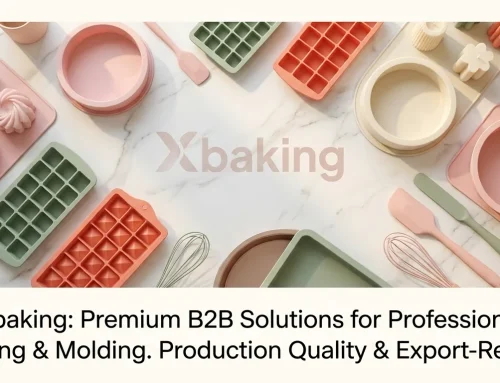
Silicone bakeware holds seven structural advantages over metal and glass pans: effortless release without greasing, food-safe inert material, dishwasher-simple cleaning, more consistent baking results, zero odor absorption, a −40 °C to +230 °C working range, and flexible flat storage. These benefits explain why silicone has moved from a novelty category to a standard shelf line in US and EU kitchen retail over the past decade — and why distributors keep expanding their silicone assortments.
1. Effortless Release, Every Time
Silicone’s naturally low surface energy means baked goods release without grease, paper liners, or flour dusting. Cakes, muffins, and meatloaf drop out with a gentle flex of the mold — no soaking, no prying, no lost crust. For commercial bakeries this translates directly into labor savings and lower product loss; for retail customers it is the single most-reviewed benefit of the category.
2. Food-Safe and Chemically Inert
Food-grade silicone does not react with acidic ingredients (tomato, citrus, berries), does not leach compounds within its temperature rating, and carries FDA and LFGB food-contact approvals. Unlike some metal pans, there is no coating to degrade and no aluminum contact question. The one specification that matters when buying: platinum-cured silicone, which is odor-free and outlasts peroxide-cured alternatives by 2–4×. Our manufacturer evaluation guide explains how to verify this in writing.
3. Cleaning Takes Seconds
Silicone is non-porous, so batter and caramelized sugar do not bond to the surface. Warm soapy water removes most residue immediately; everything is dishwasher-safe indefinitely without warping or coating damage. Compare that to metal pans that need soaking and abrasive scrubbing — which eventually destroys their non-stick coatings.
4. More Consistent Baking Results
Silicone distributes heat evenly across the mold surface and insulates gently, which reduces the hot-spot browning common with thin metal pans. The result: uniform color on muffin tops, even crust on breads, and repeatable results batch after batch — the property commercial bakers value most, since consistency is what a production kitchen actually sells.
5. No Odor or Flavor Carryover
Quality platinum-cured silicone absorbs no cooking odors. A mold used for garlic bread on Monday bakes a vanilla sponge on Tuesday with zero flavor transfer — a failure mode that plagues plastic containers and wooden tools. This is also why silicone bakeware suits both sweet and savory production lines without segregation.
6. One Material for Freezer, Oven, and Microwave
The −40 °C to +230 °C range means the same mold freezes batter, bakes it, and reheats portions — no transferring between containers. For food-service buyers this simplifies workflows; for retail packaging it provides one of the strongest shelf claims in the category (“freezer-to-oven safe”).
7. Storage and Shipping Economics
Flexible silicone molds nest, roll, and stack flat — a home kitchen drawer holds what would require a cabinet shelf in rigid pans. The same flexibility creates wholesale economics: silicone bakeware ships at lower volume-weight than metal equivalents, cutting freight cost per unit by 20–40% on comparable SKUs. For distributors, this is a margin argument, not just a convenience one.
What to Check Before Buying Silicone Bakeware
The advantages above apply to quality silicone. Three checks protect a purchase:
- Cure system — platinum-cured only for food contact; request written confirmation and FDA/LFGB test reports per SKU. Our full documentation is in the certifications overview.
- Wall thickness — bakeware walls below 1.5 mm tear at the flex points within months; quality molds run 1.5–3 mm.
- Supplier QC — incoming material certificates and pre-shipment AQL sampling, as documented in our factory QC overview.
For wholesale terms, MOQs, and private-label options on silicone bakeware lines, see our wholesale bakery supply guide.
FAQ: Silicone Bakeware Advantages
Do you need to grease silicone bakeware?
No. Quality silicone releases baked goods without grease, oil, or liners. Light greasing can speed cleanup for very sugary recipes, but it is never required for release.
Is silicone bakeware better than metal?
For release, cleaning, storage, and even browning, yes. Metal still wins for applications needing rigid structure (very large sheet pans) or maximum browning speed. Most commercial kitchens and retail assortments now carry both.
How long does silicone bakeware last?
Platinum-cured molds deliver 2,000+ bake cycles — years of daily commercial use. Premature failure almost always traces to peroxide-cured budget material or wall thickness below 1.5 mm.
Can silicone bakeware go from freezer to oven directly?
Yes. Food-grade silicone is rated −40 °C to +230 °C, so freezer-to-oven transitions are within specification with no thermal-shock risk — a genuine workflow advantage metal and glass cannot match.
What should distributors look for in a silicone bakeware supplier?
Platinum-cured material with SKU-level FDA/LFGB reports, wall thickness above 1.5 mm, documented AQL inspection, and private-label capability for custom colors and packaging. Start with samples tested through 10+ real bake cycles before ordering.
Share This Story, Choose Your Platform!
Related posts