
TL;DR – Key Takeaways
- Custom silicone molds let brands create proprietary shapes for baking, soap, candles, resin, chocolate, and ice cubes — with full ownership of the design.
- MOQ matters more than unit price. XBAKING offers a 100-piece minimum order, compared to the industry norm of 100 kg (roughly 5,000–10,000 pieces), making custom tooling accessible to small brands and Amazon sellers.
- European compliance is non-negotiable. Molds destined for the EU and UK must meet FDA, LFGB, EU REACH, and BPA-free standards — always request test reports before placing an order.
- Typical lead times range from 7 days for a prototype sample to 25–35 days for full production, depending on complexity and order volume.
- Private label and OEM services — including custom logos, Pantone color matching, and branded packaging — are standard offerings from established manufacturers.
- Cost per unit drops sharply at scale. A simple mold may cost USD 0.30–0.80 per piece at 1,000 units, while complex multi-cavity designs run USD 1.50–4.00 at the same volume.
- DDP/DAP shipping to Europe (Germany, UK, France) eliminates customs headaches for buyers — confirm your supplier handles door-to-door logistics.
Introduction
Most silicone mold factories won’t talk to you unless you commit to 100 kg of material per order — roughly 5,000 to 10,000 pieces. For a bakery testing a new product line, an Amazon seller launching a private label, or a candle brand exploring seasonal shapes, that threshold is a dealbreaker.
Custom silicone molds don’t have to come with enterprise-scale commitments. At XBAKING, the minimum order is 100 pieces — small enough to validate a concept, large enough to negotiate sensible unit economics. This guide covers everything B2B buyers in Europe need to know about sourcing custom silicone molds: materials, manufacturing steps, cost drivers, certifications, and how to choose a reliable partner.
Whether you need wholesale baking supplies at scale or a single proprietary candle mold for a holiday collection, the principles below apply.
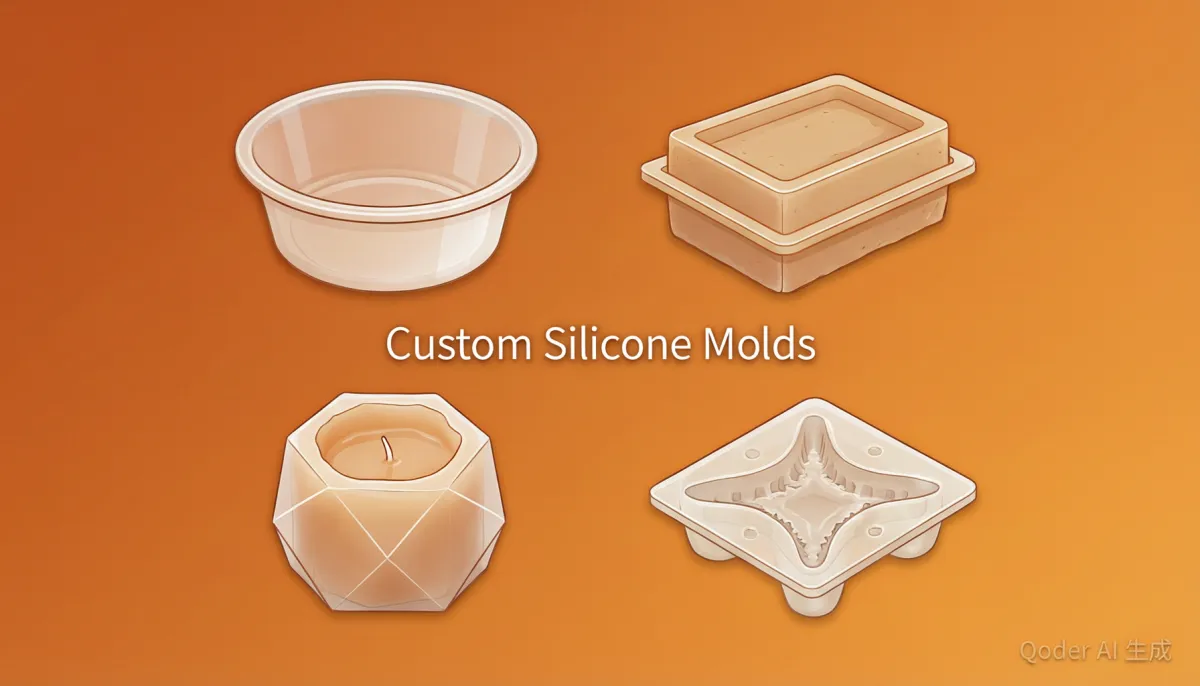
What Are Custom Silicone Molds?
Custom silicone molds are flexible, heat-resistant forms made from platinum-cure or tin-cure silicone rubber, engineered to a buyer’s exact shape, size, and cavity specification. Unlike stock molds sold in standard geometries, custom molds are built from a proprietary 3D model or physical master, giving brands exclusive use of the design.
The base material is food-grade silicone (polydimethylsiloxane, or PDMS), valued for its thermal stability from -40°C to 230°C, non-stick surface, and chemical inertness. For industrial applications like resin casting, manufacturers may use tin-cure silicone, which offers faster demolding but lower food-safety compliance.
Custom molds differ from stock molds in three ways: design ownership (the buyer holds the tooling rights), exclusivity (no other customer can order the same shape), and brand integration (logos, parting lines, and packaging can be tailored). If you are evaluating your first custom order, the MOQ and cost factor sections later in this guide cover the key stock-versus-custom decision points in detail.
Materials Used in Custom Silicone Molds
| Material | Cure Type | Food Safe | Typical Use | Temp Range |
|---|---|---|---|---|
| Platinum-cure silicone | Addition | Yes (FDA/LFGB) | Baking, chocolate, ice | -40°C to 230°C |
| Tin-cure silicone | Condensation | No | Resin, candle, soap | -40°C to 200°C |
| Liquid silicone rubber (LSR) | Platinum | Yes | High-volume injection | -50°C to 250°C |
7 Types of Custom Silicone Molds
The market for custom silicone molds spans seven major product categories, each with distinct design rules, compliance requirements, and buyer profiles.
1. Custom Baking Molds
Baking molds are the highest-volume category in the silicone mold market. Shapes include loaf pans, muffin trays, bundt forms, and novelty cake molds. Platinum-cure, food-grade silicone is mandatory, and the mold must withstand repeated oven cycles at 180–220°C without warping.
European bakeries and patisseries use custom baking molds to differentiate product lines — think branded madeleines with a company crest or seasonal gingerbread shapes. MOQ flexibility is critical here, since bakeries often test two or three shapes before committing to a seasonal run.
2. Custom Soap Molds
Custom soap molds serve the artisan soap and cosmetics market, which has grown steadily across Europe. Crafters need molds that release cleanly from cold-process and melt-and-pour soap bases. Tin-cure silicone is common because food safety is not required, but platinum-cure is preferred for brands selling to retailers with stricter compliance policies.
Popular formats include loaf molds with 4–10 cavities, single-bar molds with custom embossed logos, and novelty shapes for seasonal collections. Design wall thickness at 3–5 mm to balance rigidity with flexibility.
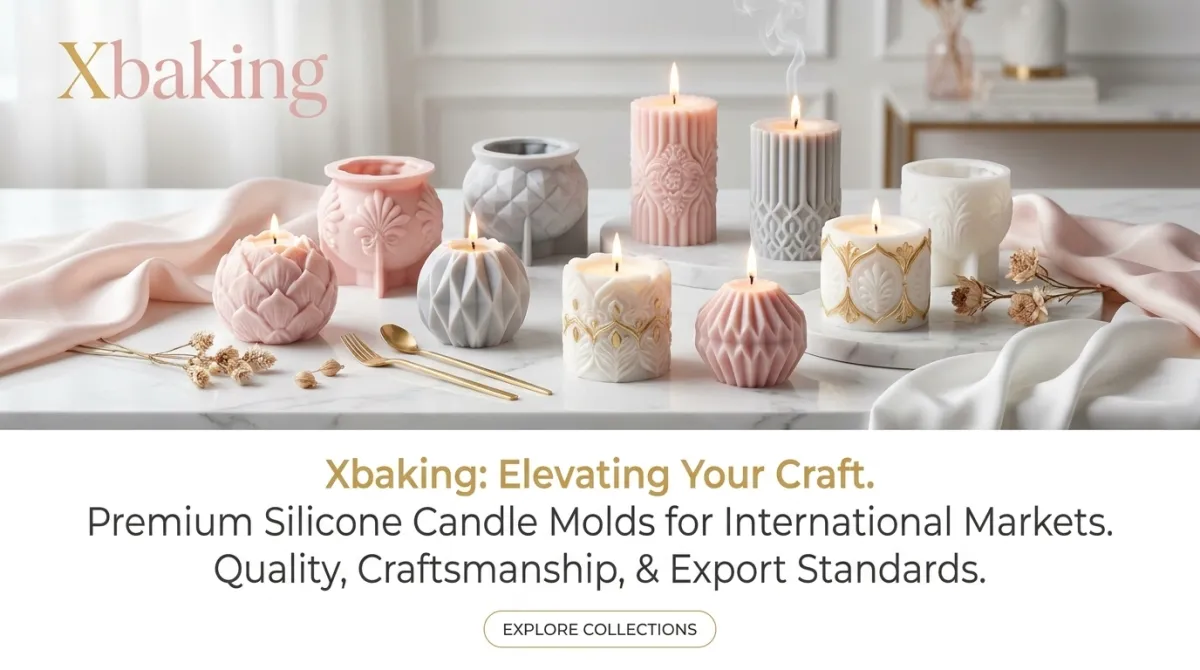
3. Custom Candle Molds
Custom candle molds have surged in demand alongside the European candle market. Silicone’s flexibility allows intricate geometric shapes, figurines, and pillar designs that rigid molds cannot release. Most candle molds use tin-cure silicone rated to 200°C, well above the melting point of soy, paraffin, and beeswax (typically 50–70°C).
Key design considerations include draft angles (minimum 2–3 degrees for clean release), vent holes for air escape, and wall thickness sufficient to contain hot wax without bulging.
4. Custom Resin Molds
Resin casting molds serve the jewelry, art, and home decor sectors. Epoxy and UV resins cure at room temperature, so thermal resistance is less critical than surface finish and tear strength. Tin-cure silicone with Shore A hardness of 20–30 is standard.
Buyers often request deep-cavity molds for geode trays, bookend sets, and river table segments. These designs demand careful attention to undercuts — any negative draft will trap the cured resin and destroy the mold during demolding.
5. Custom Chocolate Molds
Chocolate molds require the highest level of food-safety compliance. Platinum-cure, LFGB-certified silicone is the baseline for European chocolate makers. The mold surface must be mirror-smooth to produce a glossy finish on tempered chocolate, and cavity tolerances should hold within ±0.2 mm.
Multi-cavity layouts (12, 24, or 48 cavities per sheet) maximize production throughput. Bonbon molds, praline shells, and hollow-figure molds are the most requested formats. Custom chocolate molds with branded logos are increasingly popular for corporate gifting and wedding favors.
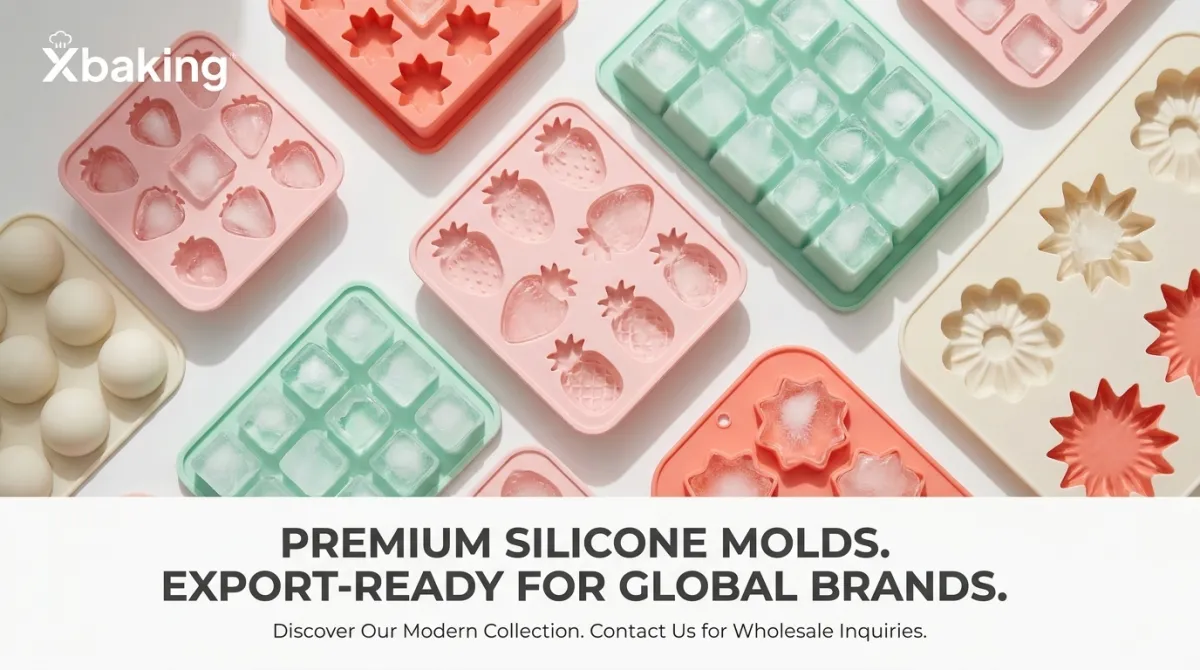
6. Custom Silicone Ice Molds
Custom ice cube molds have become a promotional and branding tool for bars, hotels, and beverage companies. Spheres, branded cubes with embossed logos, and oversized “king cube” molds are top sellers. Food-grade, BPA-free platinum-cure silicone is required since the molds contact potable water.
Design tip: include a slight taper (1–2 degrees) on each cavity wall for easy ice release, and specify a Shore A hardness of 40–50 to maintain shape when filled with water in the freezer.
7. Specialty & Industrial Molds
This category covers everything outside the mainstream: fondant molds for sugar craft, concrete molds for architectural elements, wax seal molds for stationery brands, and clay molds for pottery studios. Material selection varies widely — always confirm the application with your manufacturer before tooling begins.
How to Design Custom Silicone Molds
Designing a custom silicone mold starts with a clear product brief and ends with a production-ready 3D file. The process typically takes 3–7 days for the design phase alone.
Step 1: Define the Product Brief
Specify the end-use application (baking, soap, candle, etc.), target dimensions, number of cavities, desired wall thickness, and any branding elements such as embossed or debossed logos. Include reference images or sketches — even a hand-drawn concept accelerates the quoting process.
Step 2: Create a 3D Model
Most manufacturers accept STEP, IGES, or STL files generated in CAD software like SolidWorks, Fusion 360, or Rhino. If you lack in-house CAD capability, many OEM silicone mold suppliers offer design-for-manufacturing (DFM) services that convert sketches into production-ready 3D models.
Step 3: Design for Manufacturability (DFM) Review
A competent manufacturer will flag potential issues before tooling begins: undercuts that prevent clean demolding, walls too thin to hold shape, cavities too deep for safe release, and draft angles below recommended minimums. Request a DFM report as part of your quotation.
Step 4: Approve the Technical Drawing
The manufacturer produces a 2D technical drawing showing all critical dimensions, tolerances, parting line locations, and gate positions. Sign off on this drawing before any tool steel is cut — changes after this point incur retooling charges.
Step 5: Prototype and Sample Approval
A prototype mold is produced and used to cast sample parts. Buyers receive 3–5 sample pieces for dimensional inspection, fit testing, and compliance verification. Approve or request revisions before full production begins. For a complete walkthrough of the sampling timeline, see the custom silicone mold manufacturing guide.
Custom Silicone Mold Manufacturing Process
From approved design to shipped order, the manufacturing process follows six stages. Total lead time is typically 25–35 days for a standard order.
| Stage | Duration | Key Activities |
|---|---|---|
| Design & DFM | 3–5 days | 3D modeling, draft analysis, technical drawing |
| Master mold creation | 5–7 days | CNC machining of steel or aluminum master |
| Sampling & approval | 5–7 days | Prototype casting, dimensional checks, buyer sign-off |
| Mass production | 10–15 days | Silicone injection/pouring, curing, demolding, trimming |
| Quality control | 2–3 days | AQL sampling, visual inspection, dimension audit |
| Packaging & shipping | 3–5 days | Poly bag, carton, DDP/DAP dispatch to Europe |
Stage 1: Master Mold Fabrication
A master mold (male form) is CNC-machined from aluminum or tool steel. This master defines the cavity shape of every production mold. Surface finish on the master directly transfers to the silicone — a 600-grit polish produces a matte finish, while a mirror polish yields glossy results for chocolate and ice applications.
Stage 2: Silicone Injection and Curing
Liquid silicone is mixed with the appropriate curing agent (platinum or tin catalyst) and poured or injected into the master mold assembly. Platinum-cure silicone cures in 4–8 hours at room temperature or 1–2 hours with accelerated heat curing. Tin-cure silicone cures faster, typically 2–4 hours.
Stage 3: Trimming and Post-Processing
After demolding, flash (excess silicone at the parting line) is trimmed by hand or with precision die-cutting. Post-curing — a secondary heat cycle at 150–200°C for 2–4 hours — is performed on food-grade molds to drive off volatile organic compounds (VOCs) and ensure LFGB compliance.
Stage 4: Quality Inspection
Production molds are inspected against the approved technical drawing. Standard checks include dimensional measurement (calipers or CMM), visual inspection for surface defects, Shore hardness verification, and cavity-count confirmation. Reputable factories follow AQL 2.5 sampling per ISO 2859-1.
MOQ Guide: Why 100 Pieces Is the Sweet Spot
Minimum order quantity is the single biggest barrier to entry in custom silicone mold sourcing. Most Chinese manufacturers quote MOQs based on raw material weight — typically 100 kg of silicone per production run. Depending on mold size, that translates to 5,000–10,000 pieces of a small baking mold or 2,000–4,000 pieces of a larger loaf pan.
XBAKING structures production differently. By batching multiple customer orders on shared production lines and maintaining a stocked inventory of common silicone compounds, the factory supports a 100-piece MOQ on custom silicone molds. Here is why that matters:
| Factor | Traditional MOQ (100 kg) | XBAKING MOQ (100 pcs) |
|---|---|---|
| Upfront investment | USD 3,000–15,000 | USD 150–800 |
| Inventory risk | High — months of stock | Low — test and reorder |
| Time to market | 6–8 weeks (production only) | 3–5 weeks (including sampling) |
| Ideal for | Large distributors | Startups, Amazon sellers, bakeries |
A 100-piece order lets you test market demand, photograph products for listings, and validate quality before scaling to 1,000 or 10,000 pieces. The per-unit cost is higher at 100 pieces — expect a 20–40% premium over the 1,000-piece price — but the reduced financial risk far outweighs the margin difference for most emerging brands.
For buyers exploring wholesale baking supplies alongside custom molds, combining stock and custom items in a single shipment is an effective way to optimize freight costs while building a differentiated product range.
Cost Factors for Custom Silicone Molds
The total landed cost of a custom silicone mold depends on five variables. Understanding each one helps buyers negotiate accurately and avoid surprise charges.
1. Mold Tooling Fee
The master mold (CNC-machined aluminum or steel) is a one-time cost, typically USD 200–1,500 depending on cavity count and complexity. Simple single-cavity molds sit at the lower end; multi-cavity molds with tight tolerances command higher fees. Some manufacturers amortize tooling into the unit price across the first production run — always ask for a tooling cost breakdown.
2. Material Grade
Platinum-cure food-grade silicone costs approximately 30–50% more per kilogram than tin-cure industrial silicone. Within food-grade grades, LFGB-certified compounds (required for the European market) carry a premium over FDA-only grades. See the certifications section of our wholesale buyer’s guide for a full comparison of each standard.
3. Design Complexity
Factors that increase per-unit cost include deep cavities (more silicone material), thin walls (slower production, higher rejection rate), undercuts (additional tooling components), and multi-part assemblies (base plus lid, for example).
4. Order Quantity
Volume breaks typically occur at 100, 500, 1,000, 5,000, and 10,000 pieces. Expect the following approximate unit pricing for a standard baking mold:
| Quantity | Simple Mold (USD/pc) | Complex Mold (USD/pc) |
|---|---|---|
| 100 | 2.00–4.00 | 5.00–8.00 |
| 500 | 1.20–2.50 | 3.00–5.50 |
| 1,000 | 0.80–1.50 | 2.00–4.00 |
| 5,000 | 0.50–0.90 | 1.20–2.50 |
| 10,000+ | 0.30–0.60 | 0.80–1.80 |
5. Shipping and Duties
DDP (Delivered Duty Paid) shipping to Germany, the UK, or France typically adds USD 0.10–0.40 per piece for small-to-medium molds, depending on weight and volume. DDP pricing includes freight, customs clearance, and import VAT — the buyer pays one invoice with no hidden charges at the border.
Certifications & Safety Standards for Custom Silicone Molds
European buyers face some of the strictest product safety regulations in the world. Any custom silicone mold sold or used in the EU and UK must comply with the applicable framework for its end-use application.
Key Certifications
| Certification | Scope | Region | Test Standard |
|---|---|---|---|
| FDA 21 CFR 177.2600 | Food-contact rubber articles | USA (accepted globally) | Extraction testing |
| LFGB Section 30 | Food-contact materials | Germany / EU | Migration + organotin limits |
| EU REACH (EC 1907/2006) | Chemical substance safety | EU / EEA | SVHC screening |
| BPA-free declaration | Bisphenol A absence | Global | Third-party lab confirmation |
| EU 10/2011 (plastics regulation reference) | Specific migration limits | EU | Overall + specific migration |
Why LFGB Matters More Than FDA for European Buyers
FDA compliance is the baseline — it confirms the material is safe for food contact under US regulations. However, LFGB (German Food and Feed Code) imposes stricter limits on volatile organic compounds (VOCs) and organotin catalysts. A mold that passes FDA testing may still fail LFGB. Always specify LFGB compliance when ordering molds for the European market, and request the actual test report — not just a certificate of compliance.
For a detailed breakdown of what each certification covers and how to verify test reports, review the certifications overview in our baking supplies wholesale guide.
Post-Curing: The Hidden Step in Compliance
Post-curing — heating finished molds to 200°C for 4 hours — drives off residual volatile compounds that could otherwise cause LFGB migration test failures. This step adds cost and time but is essential for food-grade products. Confirm with your manufacturer that post-curing is included in the production process, not treated as an optional add-on.
Private Label & OEM Options for Custom Silicone Molds
Brands selling through Amazon, retail chains, or their own DTC channels need more than a custom shape — they need a complete branded product. Private label silicone mold services cover the full spectrum of customization beyond the mold itself.
Logo and Branding
Embossed or debossed logos can be machined directly into the mold cavity during master fabrication. This is the most durable branding method — the logo is part of the silicone and will never peel or fade. Setup cost is minimal (typically USD 30–80 per logo) when added during initial tooling.
Alternative branding methods include silk-screen printing on the mold surface, laser engraving on the mold back, and custom hang tags or belly bands for retail packaging.
Color Matching
Silicone accepts pigment readily. Most manufacturers offer Pantone color matching with a minimum order of 100–300 pieces per color. Standard colors (clear, white, black, red) are often available with no minimum surcharge. Custom Pantone matches may add USD 50–100 per color for pigment compounding.
Custom Packaging
Options range from simple poly bags with a branded sticker to full retail-ready packaging: printed cardboard boxes, blister packs with custom inserts, and belly-band wraps. Packaging MOQs are typically higher than mold MOQs — expect 500–1,000 pieces for custom printed boxes. Coordinate packaging orders with mold production to consolidate shipping.
OEM vs. ODM: What Is the Difference?
OEM (Original Equipment Manufacturing) means the buyer supplies the complete design, and the factory produces it to spec. ODM (Original Design Manufacturing) means the factory contributes design expertise — modifying an existing mold platform, suggesting material changes, or engineering a new shape from a buyer’s rough concept. Most European buyers use a hybrid approach: they provide the product concept and branding, and rely on the factory’s DFM capability for engineering details.
For a full overview of branding and customization services, see the Private Label & OEM Options section above.
How to Choose a Custom Silicone Mold Manufacturer
Selecting the right manufacturing partner determines your product quality, lead time reliability, and long-term cost trajectory. Use this checklist when evaluating suppliers.
Manufacturer Selection Checklist
Production capability. Does the factory operate its own CNC machines and curing ovens, or does it outsource tooling? In-house tooling means faster iteration and better quality control.
Certification portfolio. Request copies of FDA, LFGB, REACH, and BPA-free test reports. Verify that reports are issued by an accredited third-party lab (SGS, TUV, Intertek, Bureau Veritas) and are less than two years old.
MOQ flexibility. A 100-piece MOQ signals a factory optimized for small and mid-size buyers. If the only option is 100 kg, the factory is structured for large-volume contracts and may deprioritize your orders.
Sampling speed. A 7-day prototype turnaround is the benchmark. Longer sampling times suggest the factory queues prototypes behind production runs rather than maintaining a dedicated sampling line.
Communication responsiveness. B2B buyers in Europe need suppliers who respond within one business day, communicate in clear English, and assign a dedicated account manager. Test responsiveness during the inquiry stage — it only gets worse after you pay the deposit.
Shipping terms. Confirm DDP or DAP capability to your destination country. Suppliers who handle customs clearance and import documentation reduce your administrative burden and eliminate surprise charges.
References and reviews. Ask for two or three buyer references in your target market. Check independent review platforms and trade directory listings for complaint patterns.
For a structured evaluation framework, use the manufacturer selection checklist above as a supplier scorecard during your next sourcing review.
Frequently Asked Questions
How much does it cost to make a custom silicone mold?
A custom silicone mold costs between USD 200 and 1,500 for tooling (one-time master mold fee), plus a per-unit production cost of USD 0.30 to 8.00 depending on size, complexity, material grade, and order quantity. At 1,000 pieces, a standard baking mold typically runs USD 0.80–1.50 per piece. Total project cost for a 1,000-piece order of a simple mold is usually USD 1,200–3,000, including tooling, production, and DDP shipping to Europe.
How long does custom silicone mold production take?
Total lead time from design approval to delivery is typically 25–35 days. This includes 3–5 days for design and DFM review, 5–7 days for master mold fabrication, 5–7 days for sampling and buyer approval, 10–15 days for mass production and QC, and 3–5 days for packaging and shipping. Rush orders can reduce production time by 30–40% at a premium, but sampling should never be rushed — this is where design errors surface.
What is the minimum order quantity for custom silicone molds?
Industry-standard MOQs range from 100 kg of silicone material (approximately 5,000–10,000 pieces). XBAKING offers a 100-piece MOQ by batching orders on shared production lines. This lower threshold allows startups, Amazon sellers, and small bakeries to test custom molds without committing to large inventory positions. Per-unit pricing at 100 pieces carries a 20–40% premium over 1,000-piece pricing.
Can I get a custom silicone mold with my logo?
Yes. Logos can be embossed (raised) or debossed (recessed) directly into the silicone mold cavity during master fabrication, at a one-time setup cost of USD 30–80. This is the most durable branding method because the logo is integral to the mold and will not peel, fade, or wash off. Alternative methods include silk-screen printing, laser engraving on the back surface, and branded packaging.
What certifications do custom silicone molds need for Europe?
Molds intended for food contact in the EU and UK require LFGB compliance (German standard, stricter than FDA), EU REACH registration (chemical safety), and a BPA-free declaration. FDA certification alone is not sufficient for European food-contact applications. Non-food molds (resin, candle, industrial use) have lighter requirements but should still carry REACH compliance. Always request third-party test reports from SGS, TUV, or Intertek.
How do I design a custom silicone mold?
Start with a product brief specifying dimensions, cavity count, wall thickness, and end-use application. Create a 3D model in STEP, IGES, or STL format (or provide sketches for the manufacturer’s DFM team to convert). Submit the file for a design-for-manufacturability review, approve the technical drawing, and confirm samples before mass production. Most manufacturers offer free DFM analysis as part of the quotation process.
What is the difference between OEM and ODM silicone molds?
OEM (Original Equipment Manufacturing) means the buyer provides a complete, production-ready design and the factory manufactures it to specification. ODM (Original Design Manufacturing) means the factory contributes engineering expertise — developing the 3D model from a concept sketch, recommending material changes, or adapting an existing mold platform to a new application. Most European buyers use a hybrid model: they define the product concept and branding, and rely on the factory for technical engineering.
Are custom silicone molds from China safe for food contact?
Yes — provided they are manufactured from platinum-cure, food-grade silicone and carry valid LFGB or FDA test reports from an accredited laboratory. The key risk is not the country of origin but the absence of proper testing and post-curing. Reputable Chinese factories produce molds that meet or exceed European safety standards. Always verify test reports, confirm post-curing is included in the production process, and order from manufacturers who hold current certifications.
Conclusion
Custom silicone molds are one of the most cost-effective ways for brands, bakeries, and Amazon sellers to differentiate their product lines. The barriers to entry — tooling cost, MOQ, and lead time — are lower than most buyers assume, provided they partner with a manufacturer structured for small and mid-size orders.
The decision framework is straightforward: define your application, prepare a design brief (even rough sketches are enough), request quotes from two or three suppliers, verify certifications, approve samples, and scale production based on market response. A 100-piece test order removes the financial risk while giving you a market-ready product to validate demand.
XBAKING supports the full lifecycle — from initial DFM review and 7-day prototyping through LFGB-certified production and DDP shipping to Germany, the UK, and France. If you have a shape in mind, the next step takes two minutes.