
Baking Supplies Wholesale – The Complete Buyer’s Guide for Distributors and Bakeries
Key Takeaways
- The European baking supplies market is projected to exceed EUR 18 billion by 2027, creating significant opportunity for distributors and commercial bakeries that source at competitive wholesale prices.
- Baking supplies wholesale covers silicone molds, baking mats, cake pans, cookie cutters, banneton baskets, air fryer liners, and bakery packaging – all available from certified Chinese manufacturers at 30-50% below European distributor pricing.
- Minimum order quantities start at 100 pieces per SKU when you work with a factory-direct supplier like XBAKING, compared to 500-1,000 piece MOQs from most European wholesalers.
- Mandatory certifications for the European market include FDA, LFGB, EU REACH, and BPA-free compliance – always verify test reports before placing a bulk order.
- DDP (Delivered Duty Paid) shipping to Germany, the UK, and France typically takes 25-35 days by sea or 7-12 days by rail, with all customs and duties handled by the supplier.
- Private label and custom branding services are available at wholesale pricing, allowing distributors to build their own brand without investing in manufacturing equipment.
- Volume discounts of 10-25% apply at tiered quantity breakpoints, making it cost-effective to consolidate orders across multiple product categories.
Introduction
Europe’s commercial baking sector is growing at a compound annual rate of 4.2%, driven by rising demand for artisan bread, specialty pastries, and decorated cakes across Germany, the United Kingdom, and France. For distributors, bakery chains, and independent bakeries, this growth creates both opportunity and a persistent challenge: sourcing high-quality baking supplies wholesale at prices that protect margins while meeting strict European food-safety standards.
Most European bakery wholesalers impose high minimum order quantities, limited product ranges, and markups that compress downstream profitability. An increasing number of B2B buyers are turning to factory-direct sourcing from China to solve this problem – accessing a broader catalog, lower unit costs, and flexible customization options that local suppliers simply cannot match.
This guide covers everything a professional buyer needs to know about purchasing baking supplies from China for the European market: product categories, pricing structures, certification requirements, shipping logistics, and supplier evaluation criteria. Whether you operate a distribution business, supply commercial bakeries, or run a large bakery operation yourself, the information below will help you make confident, cost-effective sourcing decisions.
What Is Baking Supplies Wholesale?
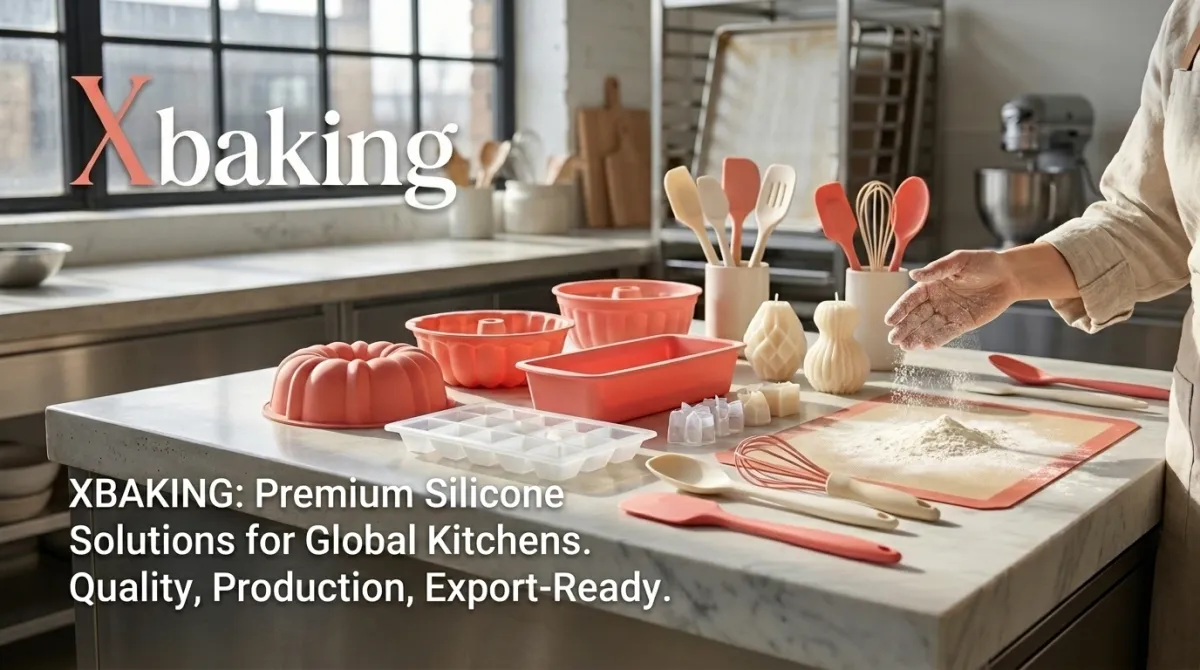
Baking supplies wholesale refers to the bulk purchase of tools, equipment, and consumables used in commercial and home baking at discounted per-unit prices. Buyers typically include bakery distributors, commercial bakery chains, catering equipment suppliers, online retail brands, and hospitality procurement departments.
The scope of wholesale baking supplies extends well beyond basic pans and trays. Modern wholesale catalogs encompass silicone baking molds, non-stick baking mats, specialized cake accessories, cookie cutters, bread-proofing baskets, air fryer accessories, and bakery-grade packaging materials. Each category serves a distinct segment of the baking market and carries its own pricing dynamics.
For B2B buyers, the wholesale model offers three core advantages: significantly lower per-unit costs compared to retail purchasing, access to private label and custom branding services, and the ability to maintain consistent inventory across multiple product lines from a single supplier. These advantages become especially pronounced when sourcing from a factory-direct manufacturer rather than a trading company or regional distributor.
Types of Wholesale Baking Supplies
Choosing the right product mix is critical for distributors and bakeries. The table below outlines the major categories available through wholesale channels, along with typical specifications and target buyer segments.
| Category | Products | Material | Typical MOQ | Buyer Segment |
|---|---|---|---|---|
| Silicone Baking Molds | Cake molds, muffin molds, loaf pans, bundt molds | Food-grade silicone (platinum-cured) | 100 pcs | Distributors, online brands |
| Silicone Baking Mats | Standard, perforated, macaron mats | Fiberglass-reinforced silicone | 100 pcs | Commercial bakeries, distributors |
| Cake Pans and Tins | Round, square, springform, tube pans | Carbon steel, aluminum, aluminized steel | 200 pcs | Bakeries, hospitality suppliers |
| Cookie Cutters | Shaped, themed, custom logo | Stainless steel, food-grade plastic | 200 pcs | Retail brands, distributors |
| Banneton Baskets | Round, oval, with/without liners | Natural rattan, cane | 100 pcs | Artisan bakeries, distributors |
| Air Fryer Silicone Liners | Round, square, rectangular | Food-grade silicone | 200 pcs | Retail brands, e-commerce sellers |
| Bakery Packaging | Cake boxes, bread bags, window boxes | Food-safe cardboard, kraft paper, PET | 500 pcs | Bakeries, distributors, catering |
Silicone Baking Molds
Silicone molds are the fastest-growing category in the wholesale baking supplies market. Their flexibility, non-stick properties, and dishwasher-safe convenience make them popular with both professional bakers and home baking enthusiasts. For distributors, silicone molds offer high margins and strong repeat-order potential.
When evaluating custom silicone molds for wholesale purchase, prioritize platinum-cured silicone over tin-cured alternatives. Platinum-cured silicone meets LFGB and FDA standards, resists yellowing, and lasts significantly longer – qualities that reduce customer complaints and returns.
Silicone Baking Mats
A silicone baking mat wholesale order is one of the most cost-effective ways to stock a commercial bakery or build a retail product line. These mats replace parchment paper, reduce waste, and provide consistent baking results. Perforated variants are increasingly popular for macaron production and dehydrating applications.
Standard sizes include full-sheet (24 x 16 inches), half-sheet (16.5 x 11.5 inches), and quarter-sheet formats. Custom sizing and branded printing are available for private label buyers looking to differentiate their offerings in competitive retail markets.
Cake Pans and Commercial Bakeware
Commercial bakeware supplies represent the backbone of any bakery operation. Carbon steel and aluminized steel pans offer excellent heat distribution and durability, while non-stick coatings reduce preparation time and improve product release. For wholesale buyers, the key specification points are gauge thickness, coating type, and edge construction.
Heavier-gauge pans (18-20 gauge) command higher wholesale prices but deliver longer service life and more even baking – an important selling point for commercial bakery clients who use pans daily in high-temperature environments.
Cookie Cutters and Cake Accessories
The cake accessories wholesale market is driven by seasonal demand peaks around holidays, weddings, and themed events. Cookie cutters, fondant tools, piping tips, and cake decorating kits generate strong sell-through during Q4 and spring wedding season.
Distributors should plan seasonal inventory 8-12 weeks ahead to allow for production and shipping lead times. Custom-shaped cookie cutters and branded decorating tools offer excellent private label opportunities with relatively low tooling costs.
Bakery Packaging
Bakery packaging suppliers serve a market that is growing rapidly as takeaway, delivery, and e-commerce bakery channels expand. Food-safe cake boxes, bread bags with windows, cupcake carriers, and kraft paper bags are essential consumables that bakeries reorder frequently.
Packaging is also one of the highest-volume wholesale categories, with MOQs typically starting at 500 pieces per design. However, the per-unit cost is low, and the reorder frequency makes this category a reliable revenue stream for distributors.

How to Source Baking Supplies from China
Sourcing baking supplies from China follows a structured process that minimizes risk and ensures product quality. The five-step workflow below is designed for B2B buyers who are new to international procurement or looking to optimize an existing supply chain.
Step 1: Identify and Shortlist Suppliers
Begin by searching for manufacturers rather than trading companies. A manufacturer controls production, pricing, and quality directly, which translates to lower costs and faster communication. Check for factory audit reports, product certifications, and references from existing European clients.
Platforms such as Alibaba, Made-in-China, and Global Sources are useful starting points, but direct outreach to factory websites often yields more competitive pricing and more responsive communication.
Step 2: Verify Certifications and Compliance
Before requesting samples, confirm that the supplier holds valid certifications for your target market. For European buyers, the essential certifications are FDA (for US re-export), LFGB (for Germany and DACH region), EU REACH (for all EU member states), and documented BPA-free status.
Request copies of test reports from accredited laboratories such as SGS, TUV, or Bureau Veritas. Valid reports should be less than 12 months old and reference the specific product materials being ordered. For a comprehensive overview, see the certifications section of the custom silicone molds guide.
Step 3: Request Samples and Evaluate Quality
Order samples of every SKU you intend to stock. Evaluate samples for material quality, dimensional accuracy, color consistency, packaging integrity, and any odor or residue that might indicate inferior raw materials. For silicone products, perform a pinch test – high-quality platinum-cured silicone should not turn white when pinched.
Step 4: Negotiate Pricing and Place Your Order
Once samples are approved, request a formal quotation that specifies unit price by quantity tier, payment terms, production lead time, packaging specifications, and shipping method. Compare quotations from at least two suppliers before committing. For a detailed framework on evaluating suppliers, refer to the custom silicone molds guide.
Step 5: Arrange Shipping and Customs Clearance
Work with your supplier to select the most cost-effective shipping method for your order size and timeline. The supplier should provide a packing list, commercial invoice, certificate of origin, and any required test reports for customs clearance. DDP and DAP terms are covered in detail in the shipping section below.
Wholesale Pricing and MOQ Explained
Wholesale pricing for baking supplies is structured around volume tiers. The more units you order per SKU, the lower the per-unit cost. Understanding this structure helps buyers plan orders that maximize margin while managing cash flow and storage capacity.
| Order Volume (per SKU) | Typical Discount | Best For |
|---|---|---|
| 100 – 499 pieces | Base wholesale price | Small bakeries, trial orders |
| 500 – 1,999 pieces | 10-15% discount | Growing distributors, seasonal stock |
| 2,000 – 4,999 pieces | 15-20% discount | Established distributors |
| 5,000+ pieces | 20-25% discount | Large-scale distributors, contract supply |
Why MOQ Matters
Most European bakery wholesalers require minimum orders of 500-1,000 pieces per SKU, and some branded suppliers impose minimums measured in kilograms or pallets. This creates a barrier for small-to-medium distributors, specialty bakeries, and e-commerce sellers who want to test new products without committing to large inventory investments.
XBAKING’s MOQ of 100 pieces per SKU addresses this gap directly. Buyers can trial new product lines, diversify their catalog, and scale up based on actual market demand rather than forecasts. This low MOQ is particularly valuable for bulk baking supplies in niche categories such as custom-shaped molds or seasonal cookie cutters.
Factors That Affect Wholesale Pricing
Several variables influence the final unit price of wholesale baking supplies beyond raw quantity. Material grade (platinum-cured vs. tin-cured silicone, 18-gauge vs. 22-gauge steel), customization complexity (custom shapes, branded printing, bespoke packaging), and shipping method all affect landed cost. Buyers should always request a landed-cost breakdown that includes production, packaging, freight, and applicable duties to make accurate comparisons between suppliers.
Certifications Required for European Markets
Selling baking supplies in Europe requires compliance with food-contact material regulations. The specific certifications you need depend on the countries where your products will be sold, but three standards cover the vast majority of scenarios.
| Certification | Region | Scope | Test Standard |
|---|---|---|---|
| FDA 21 CFR 177.2600 | United States (also accepted in many EU countries) | Silicone, rubber, plastic food-contact materials | Migration testing, heavy metals |
| LFGB Section 30/31 | Germany, Austria, Switzerland | All food-contact materials | Organoleptic, migration, heavy metals |
| EU REACH (EC 1907/2006) | All EU member states | Chemical substances in products | SVHC screening, substance restrictions |
| BPA-Free Declaration | EU-wide (mandatory in France for food-contact) | Products containing polycarbonate or epoxy | Bisphenol A migration below detection limit |
LFGB certification is the most stringent standard and is effectively a prerequisite for selling baking supplies in the German-speaking market. It includes organoleptic testing – verifying that the product does not transfer taste or odor to food – which is not required under FDA regulations.
For distributors sourcing from China, always request original test reports issued by an accredited third-party laboratory. Self-declared certificates from manufacturers without independent lab verification should not be accepted. Detailed certification requirements and verification steps are covered in the certifications section of our custom silicone molds guide.
Cake Accessories Wholesale: What Distributors Need
Cake accessories represent one of the highest-margin and most dynamic categories in the wholesale bakery distributors market. The category includes cake pans, turntables, piping sets, fondant tools, cake boards, dowels, edible decorations, and packaging – essentially everything a professional or hobbyist baker needs beyond the oven.
Market Dynamics
Demand for cake accessories is driven by three buyer segments: professional bakeries (steady, high-volume orders), hobbyist bakers (seasonal spikes around holidays and events), and e-commerce sellers (year-round demand with peaks aligned to social media trends). Distributors who serve all three segments need a broad catalog and flexible ordering terms.
Sourcing Strategy
For cake accessories, diversification across sub-categories is more important than depth in any single product. A distributor who stocks 20 different piping tip sets, 15 fondant tool kits, and 10 cake board sizes will capture more total revenue than one who concentrates on a narrow range. The low unit cost of most cake accessories makes broad catalog strategies viable even at moderate order volumes.
Seasonal Planning
The cake accessories market follows a predictable seasonal pattern. Q4 (October through December) accounts for 35-40% of annual sales in most European markets, driven by Halloween, Christmas, and New Year baking. Spring (March through May) generates a secondary peak around Easter and wedding season. Distributors should place orders 10-14 weeks before each peak to ensure inventory arrives on time.
For custom-branded cake accessories and private label packaging, the private label and OEM services offered by factory-direct suppliers provide a cost-effective way to differentiate your catalog from generic competitors.
Shipping and Logistics: DDP to Europe
International shipping is often the most uncertain element of sourcing baking supplies from China. Understanding the available shipping methods and Incoterms allows buyers to plan lead times accurately and avoid unexpected costs.
| Shipping Method | Transit Time to Europe | Cost per CBM (approx.) | Best For |
|---|---|---|---|
| Sea freight (FCL) | 28-38 days | USD 80-150 | Large orders (5+ CBM) |
| Sea freight (LCL) | 32-42 days | USD 120-200 | Medium orders (1-4 CBM) |
| Rail freight (China-Europe) | 18-25 days | USD 150-250 | Time-sensitive medium orders |
| Air freight | 5-8 days | USD 5-8 per kg | Urgent samples, small high-value orders |
DDP vs. DAP Explained
DDP (Delivered Duty Paid) means the supplier handles all logistics, including freight, customs clearance, import duties, and last-mile delivery to the buyer’s warehouse. The buyer receives goods at their door with no additional charges. This is the simplest option for buyers who want a single, predictable landed cost.
DAP (Delivered at Place) means the supplier covers freight and delivery to the buyer’s location, but the buyer is responsible for import duties, VAT, and customs clearance. DAP can be cost-effective for buyers who have their own customs broker or who want to reclaim import VAT.
XBAKING offers both DDP and DAP shipping to major European destinations including Germany, the United Kingdom, France, the Netherlands, Italy, and Spain. For most first-time importers, DDP is the recommended option because it eliminates administrative complexity and provides full cost transparency before shipment.
Lead Time Planning
Total lead time includes production (15-25 days depending on order size and customization) plus transit time. Buyers should plan for 40-60 days total from order confirmation to warehouse delivery for sea freight, or 25-35 days for rail freight. Building a 2-4 week buffer into inventory planning accounts for seasonal port congestion, customs inspections, and other routine delays.
How to Choose a Wholesale Bakery Supplier
Selecting the right supplier is the single most important decision in the wholesale sourcing process. The evaluation checklist below covers the criteria that matter most for B2B buyers importing baking supplies into Europe.
Supplier Evaluation Checklist
Production capability. Does the supplier manufacture the products themselves, or are they a trading company? Factory-direct suppliers offer better pricing, faster communication, and greater control over customization. Request a factory audit report or video tour if an in-person visit is not feasible.
Certification portfolio. Does the supplier hold current FDA, LFGB, EU REACH, and BPA-free certifications issued by accredited laboratories? Are test reports available for review before order placement?
MOQ flexibility. Is the supplier willing to work with trial orders of 100 pieces per SKU, or do they require large minimum commitments? Flexible MOQs indicate a supplier who invests in long-term client relationships rather than maximizing individual order value.
Customization services. Can the supplier provide private label packaging, custom mold designs, branded products, and bespoke color matching? A supplier with in-house tooling and design capability reduces lead times and communication overhead for custom projects.
Shipping and logistics. Does the supplier offer DDP and DAP shipping to your specific country? Do they provide complete export documentation including commercial invoices, packing lists, certificates of origin, and test reports?
Communication and responsiveness. Does the supplier respond to inquiries within 24 hours? Is there a dedicated account manager who understands your market and product requirements? Communication quality during the inquiry stage is a reliable indicator of post-order service.
References and track record. Can the supplier provide references from existing European clients? A supplier who actively serves the German, UK, or French market will already understand regional requirements and buyer expectations.
Frequently Asked Questions
What is the minimum order for wholesale baking supplies?
Minimum order quantities vary by supplier and product type. European bakery wholesalers typically require 500-1,000 pieces per SKU, while Chinese factory-direct suppliers like XBAKING offer MOQs as low as 100 pieces per SKU. Lower MOQs allow buyers to test new product lines, diversify their catalog, and reduce inventory risk – particularly valuable for small-to-medium distributors and specialty bakeries.
How long does shipping take for bulk baking orders from China?
Total lead time from order confirmation to warehouse delivery is typically 40-60 days for sea freight and 25-35 days for rail freight. This includes 15-25 days for production plus 18-38 days for transit, depending on the shipping method and destination. Air freight reduces total lead time to 10-15 days but is cost-effective only for small, high-value, or urgent orders.
Do you offer DDP shipping to Europe?
Yes. DDP shipping is available to Germany, the United Kingdom, France, the Netherlands, Italy, Spain, and other European destinations. Under DDP terms, the supplier handles all freight, customs clearance, import duties, and last-mile delivery. The buyer receives goods at their specified address with no additional charges. DAP shipping is also available for buyers who prefer to manage their own customs clearance.
What certifications do wholesale baking supplies need?
Baking supplies sold in Europe must comply with food-contact material regulations. The essential certifications are LFGB (for Germany and DACH markets), EU REACH (for all EU member states), and BPA-free declarations (mandatory in France). FDA certification is required if products will also be sold in the United States. Always request original test reports from accredited third-party laboratories such as SGS, TUV, or Bureau Veritas.
How do I find reliable baking supplies wholesale suppliers?
Start by searching manufacturer-direct platforms and factory websites rather than trading company directories. Verify that the supplier holds valid certifications for your target market, request samples before placing orders, and ask for references from existing European clients. Evaluate communication responsiveness, MOQ flexibility, customization capability, and shipping options. A supplier who scores well across all these criteria is likely to be a reliable long-term partner.
Can I get private label baking supplies at wholesale prices?
Yes. Most factory-direct baking supplies manufacturers offer private label services that include custom packaging design, branded printing on products, bespoke color matching, and custom mold creation. Private label pricing is typically 5-15% above standard wholesale pricing, depending on customization complexity and order volume. This allows distributors to build their own brand identity while maintaining competitive margins.
What payment terms are available for wholesale orders?
Standard payment terms for wholesale baking supplies from Chinese manufacturers include T/T (telegraphic transfer) with a 30% deposit and 70% balance before shipment or against copy of bill of lading. Other common options include L/C (letter of credit) for larger orders, PayPal for sample orders, and Western Union for smaller transactions. Some suppliers offer open account terms (Net 30 or Net 60) to established clients with a proven order history.
How do I calculate the right order quantity for my bakery?
Calculate your order quantity by multiplying your average monthly usage by the desired coverage period (typically 2-3 months to account for shipping lead time), then adding a 10-15% safety buffer for demand fluctuations. For distributors, analyze sales velocity data across each SKU and prioritize higher-volume items for larger orders to maximize volume discounts. Start with a trial order at MOQ level for new product lines, then scale based on actual sell-through data.
What is the difference between a manufacturer and a trading company?
A manufacturer produces goods in their own factory and controls pricing, quality, and production scheduling directly. A trading company purchases goods from one or more manufacturers and resells them at a markup. Working with a manufacturer gives buyers lower prices, faster customization, and direct quality control. Verify manufacturing status by requesting a factory audit report, production facility photos, or a video tour.
How do I handle quality issues with a wholesale order?
Establish a clear quality agreement before production that specifies acceptable defect rates, inspection procedures, and remedy terms. Request pre-production samples for approval, arrange third-party inspection during or after production (services such as QIMA or AsiaInspection), and document any issues with photos and written descriptions upon receipt. A reputable supplier will offer replacement, refund, or credit for verified quality defects.
Conclusion
The European baking supplies market presents a substantial and growing opportunity for distributors, commercial bakeries, and e-commerce sellers who can source quality products at competitive wholesale prices. Factory-direct sourcing from China – backed by proper certifications, flexible MOQs, and reliable DDP shipping – offers a clear cost advantage over traditional European wholesale channels, typically delivering 30-50% savings on landed unit costs.
The key to successful sourcing lies in selecting the right supplier: one who combines manufacturing capability, valid European certifications, low minimum order quantities, private label services, and responsive communication. By following the evaluation framework and sourcing workflow outlined in this guide, B2B buyers can build a dependable supply chain that supports both immediate inventory needs and long-term business growth.
XBAKING is a Chinese manufacturer of silicone molds, baking mats, cake pans, cookie cutters, banneton baskets, air fryer liners, and bakery packaging – serving distributors and bakeries across Germany, the UK, France, and the wider European market. With an MOQ of 100 pieces, FDA/LFGB/EU REACH certifications, private label services, and DDP shipping to major European destinations, XBAKING provides a streamlined sourcing experience for professional buyers.
Ready to discuss your wholesale baking supplies requirements?